Self-study curriculum from the Colorado School
Public Health

Introduction to the Curriculum & General Info

Researchers at the Colorado School of Public Health spent months poring over thousands of published articles to create a self-study curriculum for The Tea on THC. See how much you know about why young people are using high-concentration cannabis, how they're getting it, and what it may be doing to their mental and physical health.

Discover what cannabis is and understand the significant impacts on your physical and mental health, all backed by the latest scientific evidence. Dive in to gain a deeper understanding and prioritize your well-being.

By participating in this lesson, students will be able to understand:

  • What cannabis is, including high-concentration cannabis.
  • Different kinds of cannabis products, including high-concentration cannabis products.
  • The impacts of cannabis use on physical and mental health, including specific impacts related to high-concentration cannabis use.
  • Youth: Lesson 1 - Unlock the Truth About Cannabis
  • Welcome to a lesson on cannabis and its impact on your health! - Learn about what cannabis is and how it affects your body. Learn about what can happen if you use cannabis.
  • Chapter 1 - What is Cannabis?
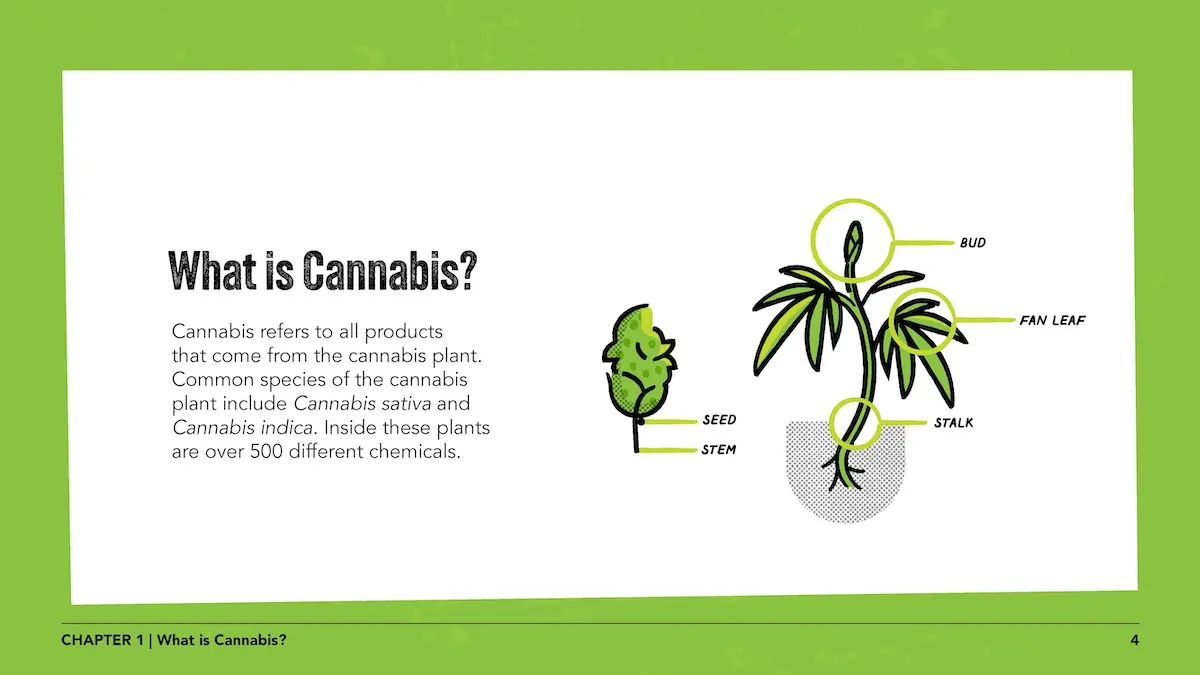
  • What is Cannabis? - Cannabis refers to all products that come from the cannabis plant. Common species of the cannabis plant include Cannabis sativa and Cannabis indica. Inside these plants are over 500 different chemicals.
  • Youth lesson 1 page 5
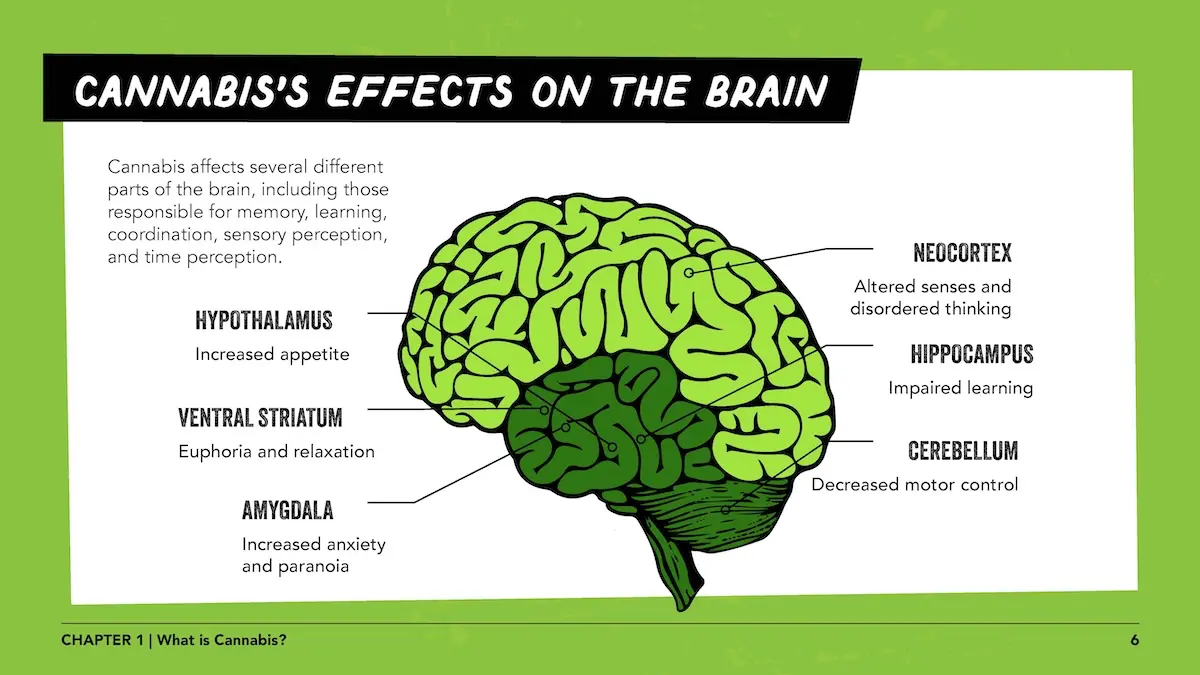
  • Cannabis's effects on the brain - Cannabis affects several different parts of the brain, including those responsible for memory, learning, coordination, sensory perception, and time perception. Parts of brain: Hypothalamus - increased appetite, ventral striatum - euphoria and relaxation, amygdala - increased anxiety and paranoia, neocortex - altered senses and disordered thinking, hippocampus - impaired learning, cerebellum - decreased motor control
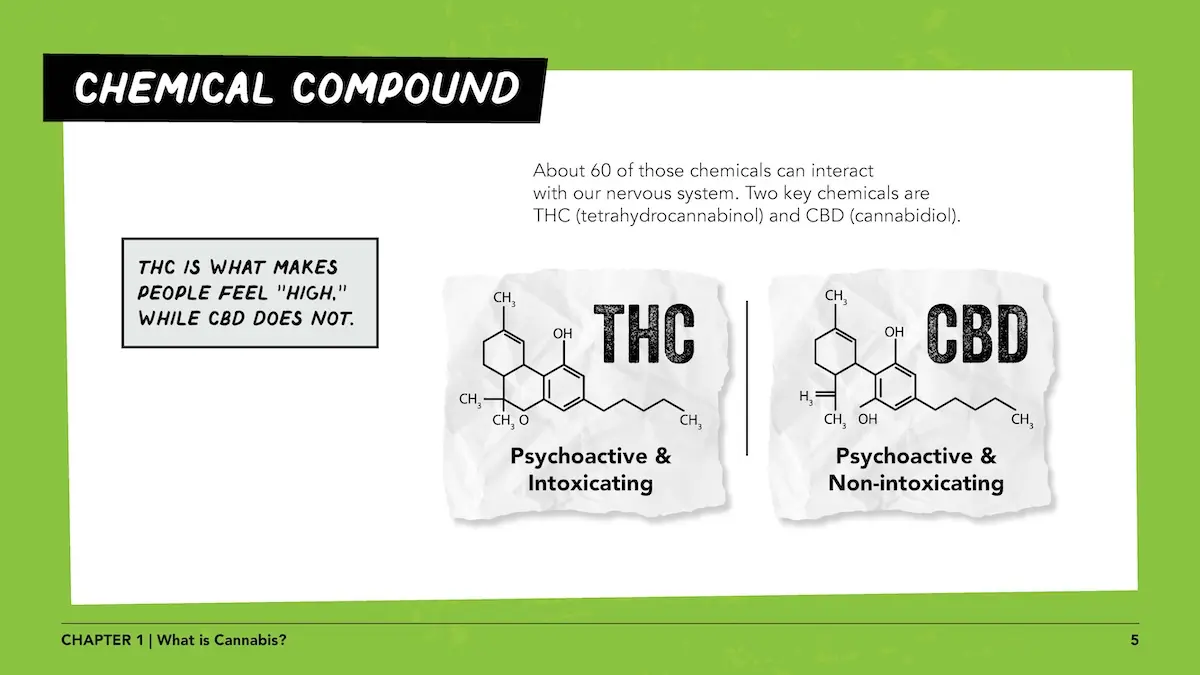
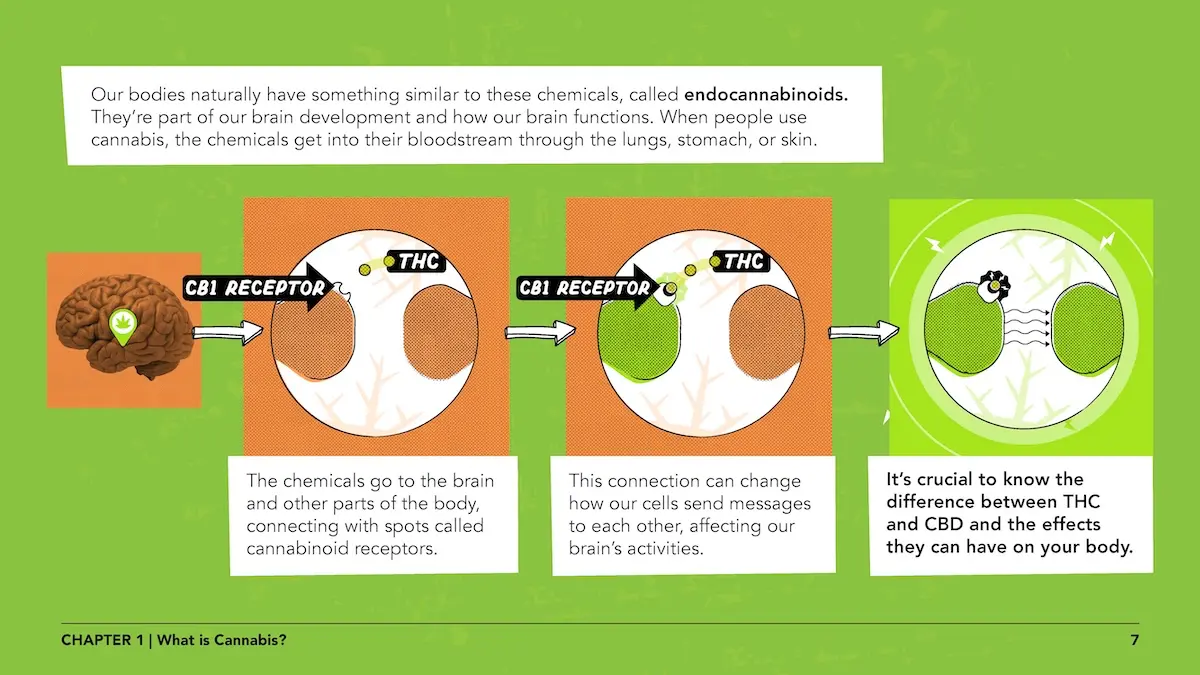
  • Our bodies naturally have something similar to these chemicals, called endocannabinoids.They’re part of our brain development and how our brain functions. When people use cannabis, the chemicals get into their bloodstream through the lungs, stomach, or skin. The chemicals go to the brain and other parts of the body, connecting with spots called cannabinoid receptors. This connection can change how our cells send messages to each other, affecting our brain’s activities. It’s crucial to know the difference between THC and CBD and the effects they can have on your body.
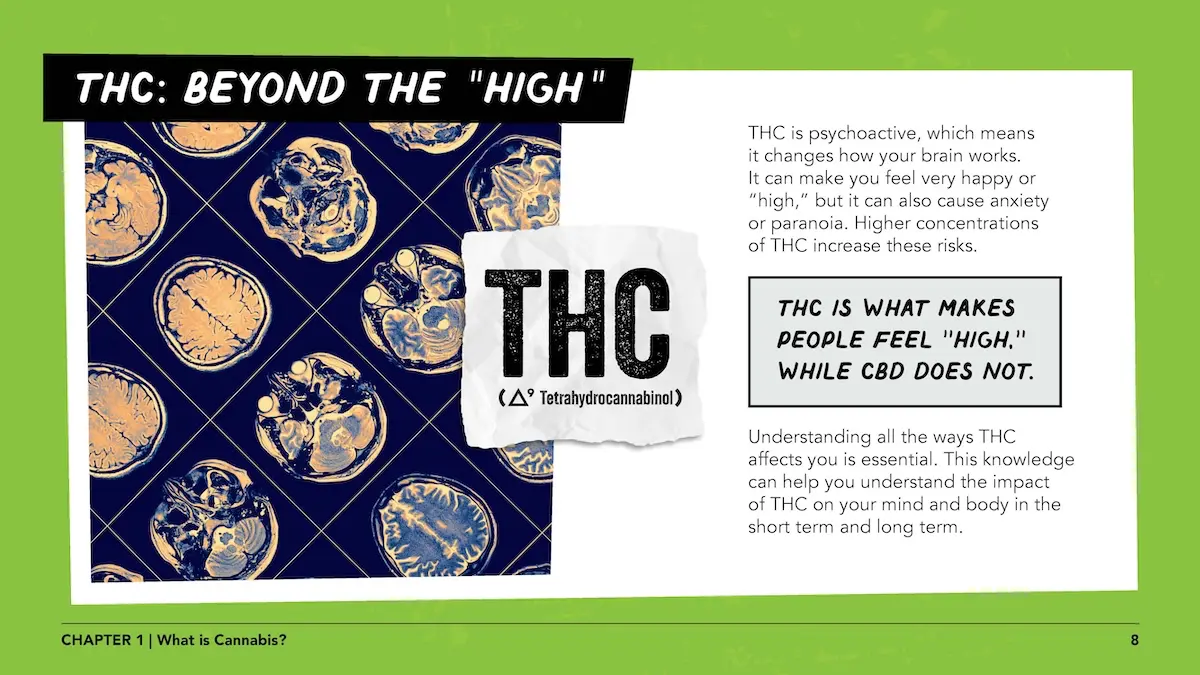
  • THC: Beyond the "High" - THC is psychoactive, which means it changes how your brain works. It can make you feel very happy or “high,” but it can also cause anxiety or paranoia. Higher concentrations of THC increase these risks. Understanding all the ways THC affects you is essential. This knowledge can help you understand the impact of THC on your mind and body in the short term and long term.
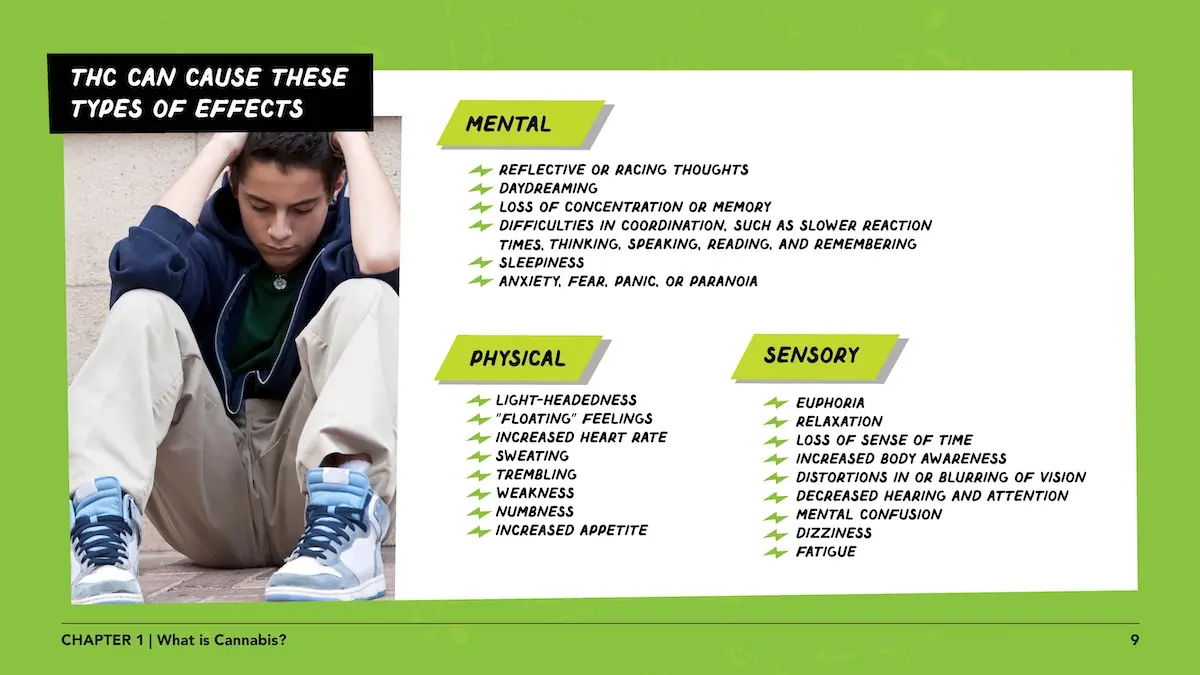
  • THC Can Cause These Types of Effects: Mental - Reflective, Daydreaming, Loss of concentration or memory, difficulties in coordination, such as slower reaction times, thinking, speaking, reading, and remembering sleepiness, anxiety, fear, panic, or paranoia. Physical - Light-headedness, "floating" feelings, increased heart rate, sweating, trembling, weakness, numbness, increased appetite. Sensory - euphoria, relaxation, loss of sense of time, increased body awareness, distortions in or blurring of vision, decreased hearing and attention, mental confusion, dizziness, fatigue.
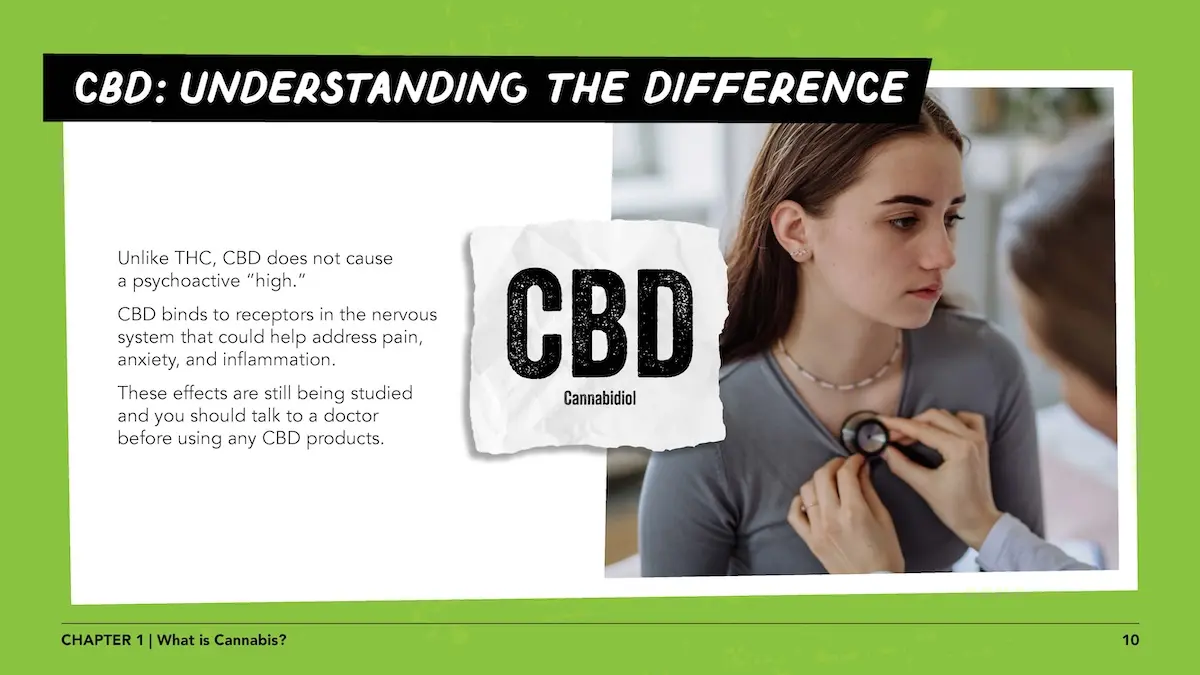
  • CBD: Understanding the Difference Unlike THC, CBD does not cause a psychoactive “high.”CBD binds to receptors in the nervous system that could help address pain, anxiety, and inflammation. These effects are still being studied and you should talk to a doctor before using any CBD products.
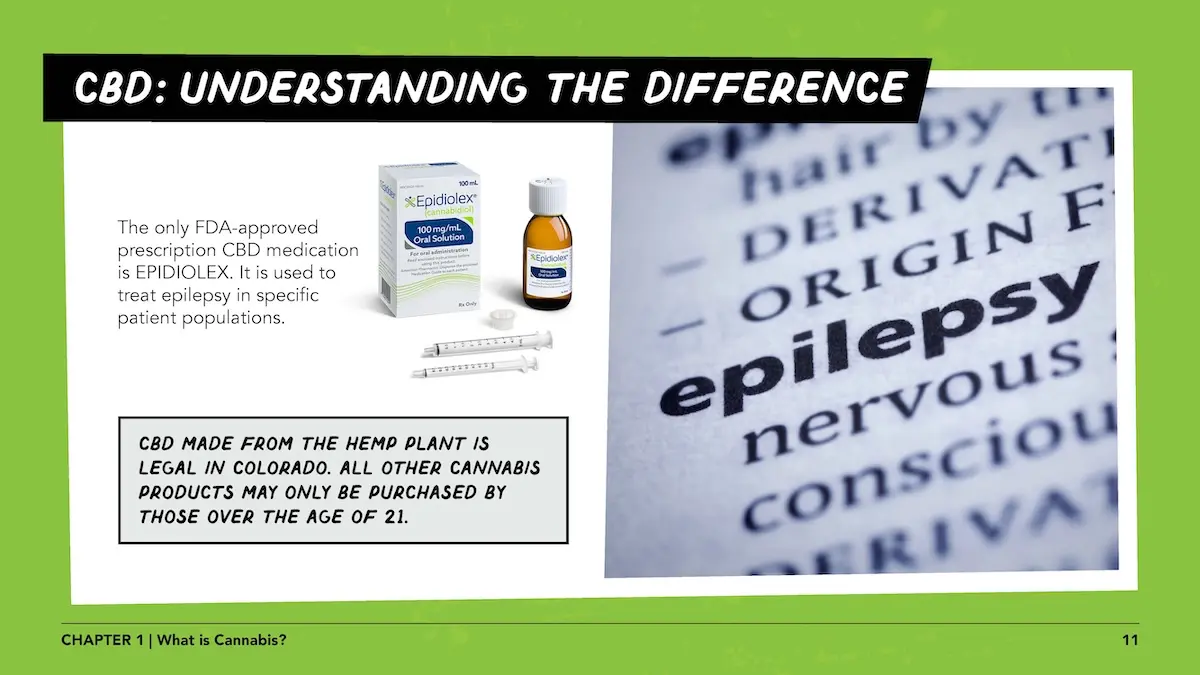
  • CBD: Understanding the Difference The only FDA-approved prescription CBD medication is EPIDIOLEX. It is used to treat epilepsy in specific patient populations. (CBD made from the hemp plant is legal in Colorado. All other cannabis products may only be purchased by those over the age of 21)
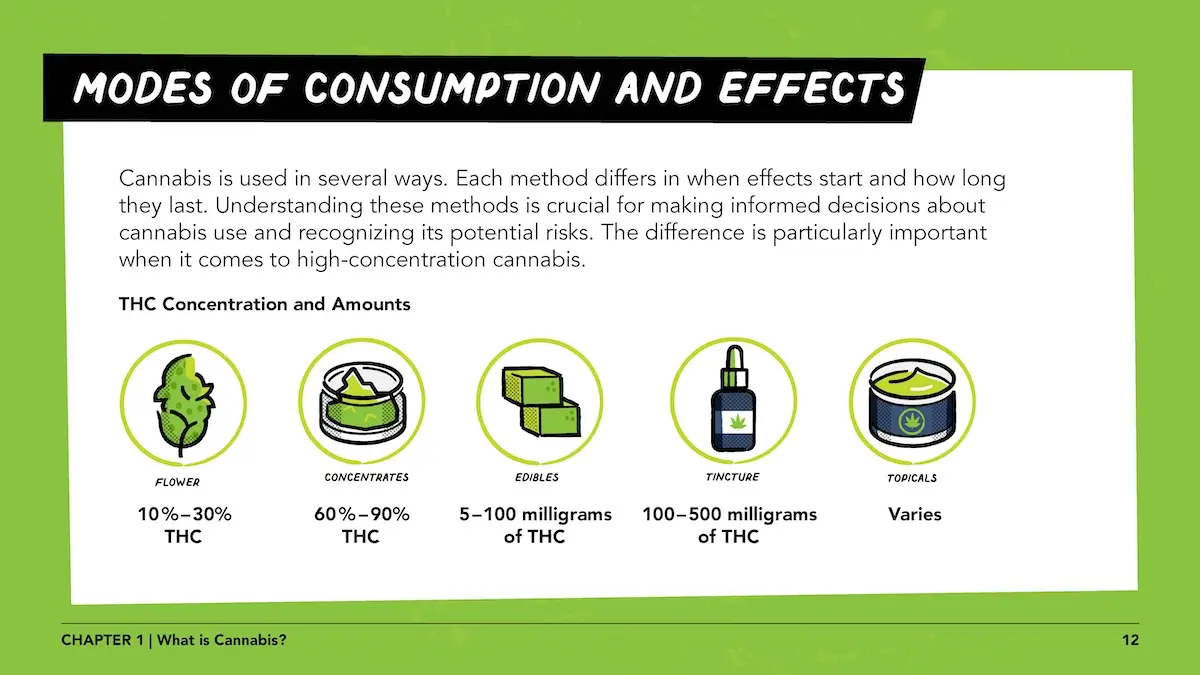
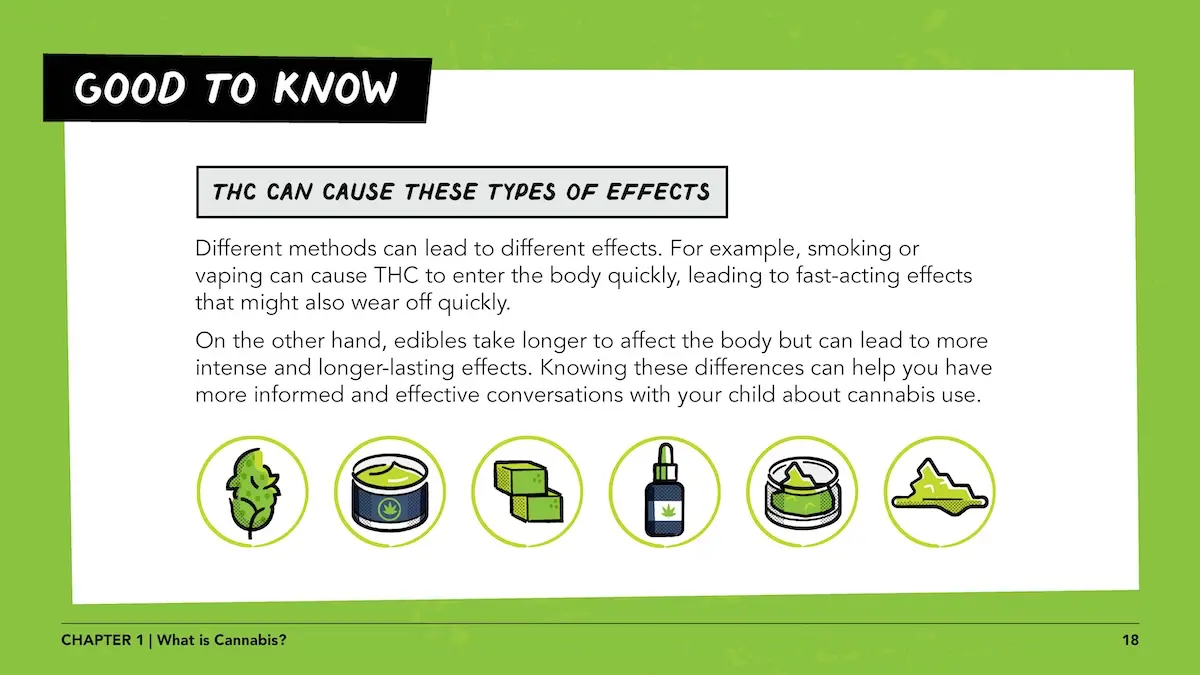
  • Modes of Consumption and Effects: CHAPTER 1 | What is Cannabis?12modesCannabis is used in several ways. Each method differs in when effects start and how long they last. Understanding these methods is crucial for making informed decisions about cannabis use and recognizing its potential risks. The difference is particularly important when it comes to high-concentration cannabis. THC Concentration and Amounts: Flower - 10%-30% THC, Concentrates - 60%-90% THC, Edibles - 5-100 milligrams of THC, Tincture - 100-500 milligrams of THC, Topicals - Varies.
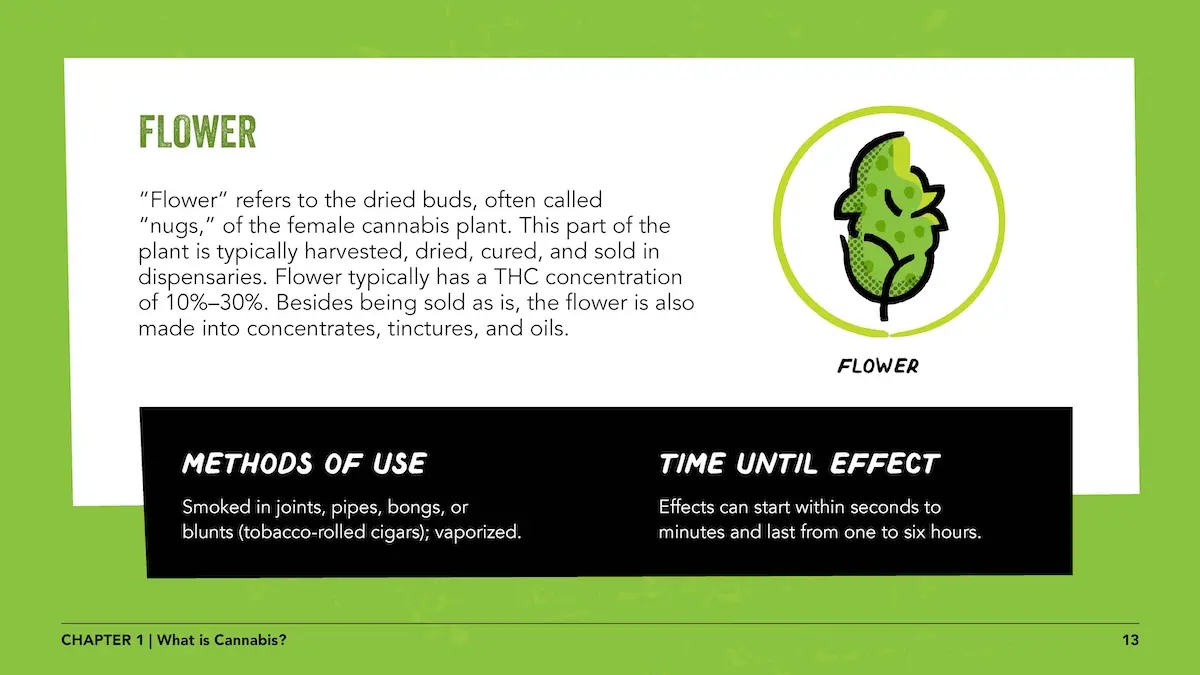
  • Information on flower: "Flower" refers to the dried buds, often called "nugs", of the female cannabis plant. This part of the plant is typically harvested, dried, cured, and sold in dispensaries. Flower typically has a THC concentration of 10%-30%. Besides beings old as is, the flower is also made into concentrates, tinctures, and oils.
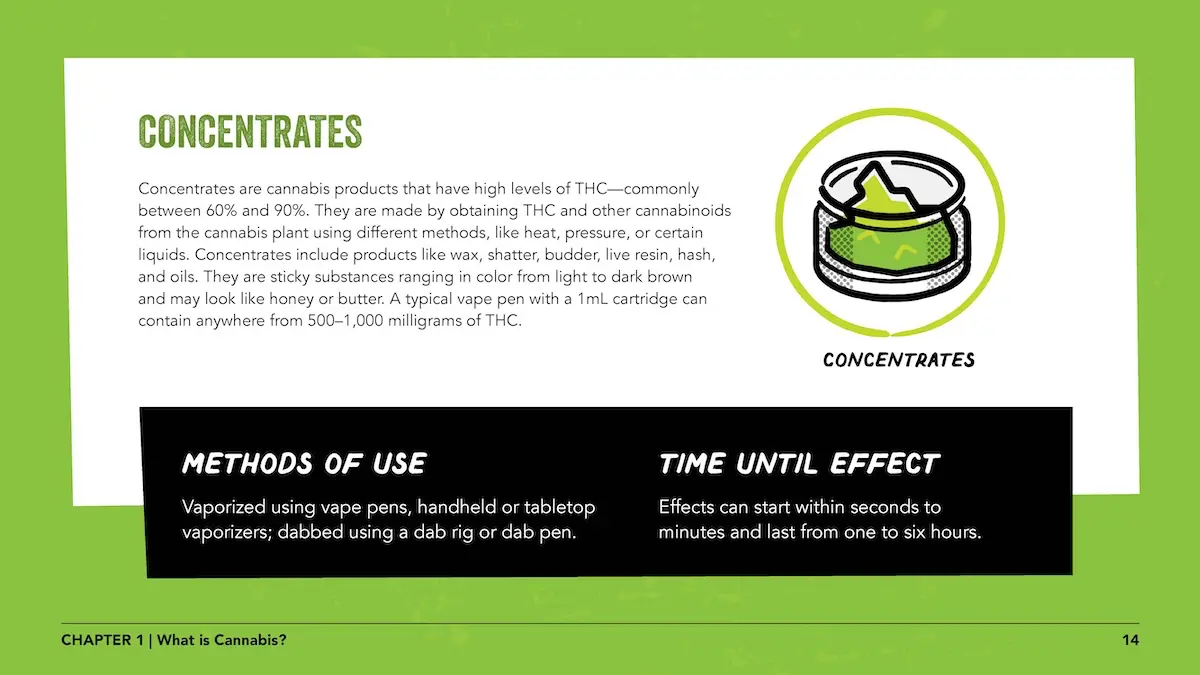
  • Information on Concentrates: Concentrates are cannabis products that have high levels of THC - commonly between 60% and 90%. They are made by obtaining THC and other cannabinoids from the cannabis plant using different methods, like heat, pressure, or certain liquids. Concentrates include products like wax, shatter, budder, live resin, hash, and oils. They are sticky substances ranging in color from light to dark brown and may look like honey or butter. A typical vape pen with a 1 mL cartridge can contain anywhere from 500-1,000 milligrams of THC. Methods of Use: Vaporized using vape pens, handheld or tabletop vaporizers; dabbed using a dab rig or dab pen. Time until effect: Effects can start within seconds to minutes and last from one to six hours.
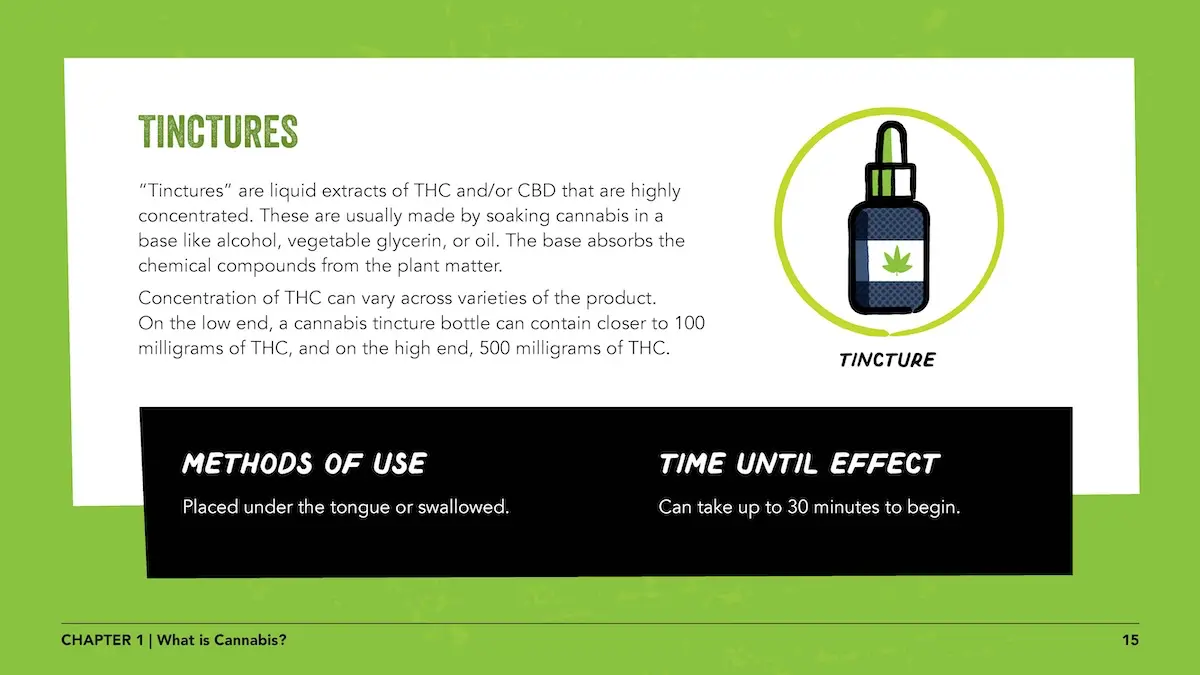
  • Information on tinctures: "Tinctures" are liquid extracts of THC and/or CBD that are highly concentrated. These are usually made by soaking cannabis in a base like alcohol, vegetable glycerin, or oil. The base absorbs the chemical compounds from the plant matter. Concentration of THC can vary across varieties of the product. On the low end, a cannabis tincture bottle can contain closer to 100 milligrams of THC, and on the high end, 500 milligrams of THC. Methods of use: Placed under the tongue or swallowed. Time until effect: Can take up to 30 minutes to begin.
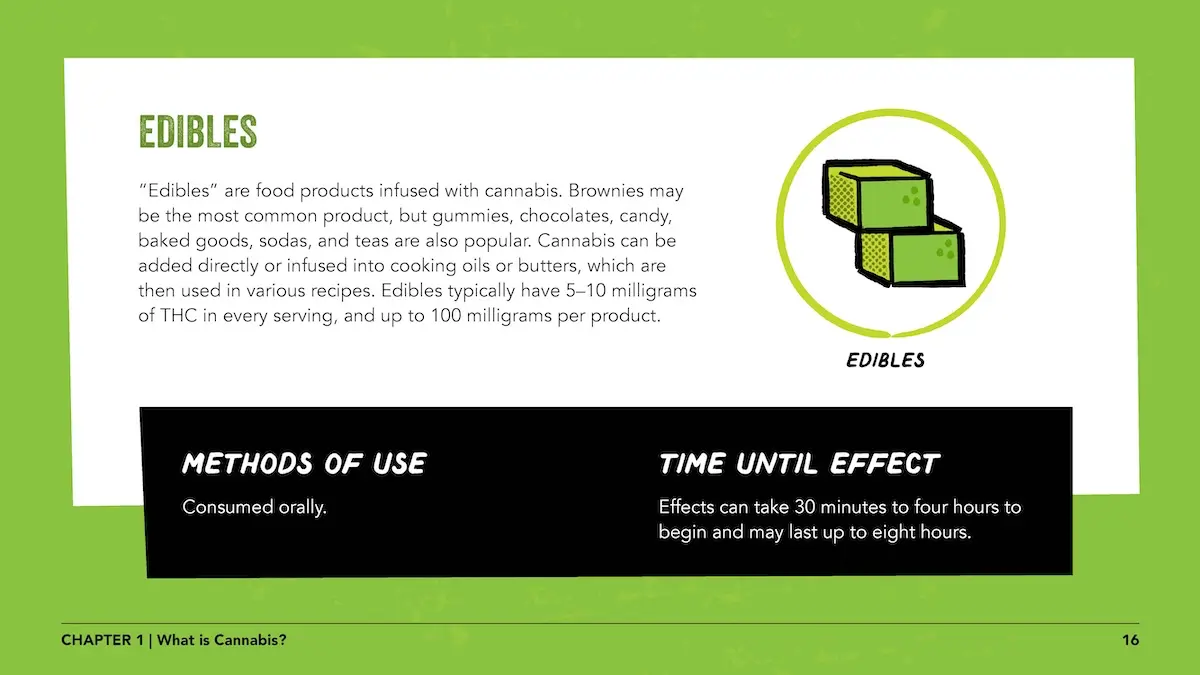
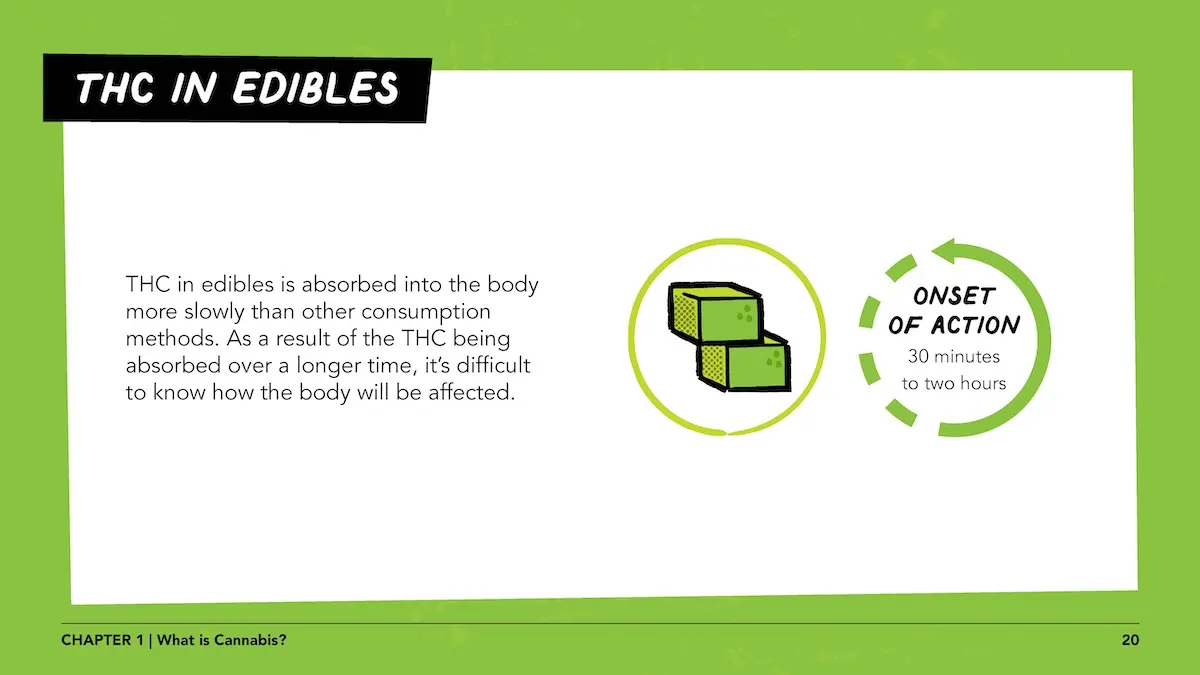
  • Information on Edibles: “Edibles” are food products infused with cannabis. Brownies may be the most common product, but gummies, chocolates, candy, baked goods, sodas, and teas are also popular. Cannabis can be added directly or infused into cooking oils or butters, which are then used in various recipes. Edibles typically have 5–10 milligrams of THC in every serving, and up to 100 milligrams per product. Methods of use: Consumed orally. Time until effect: effects can take 30 minutes to four hours to begin and may last up to eight hours.
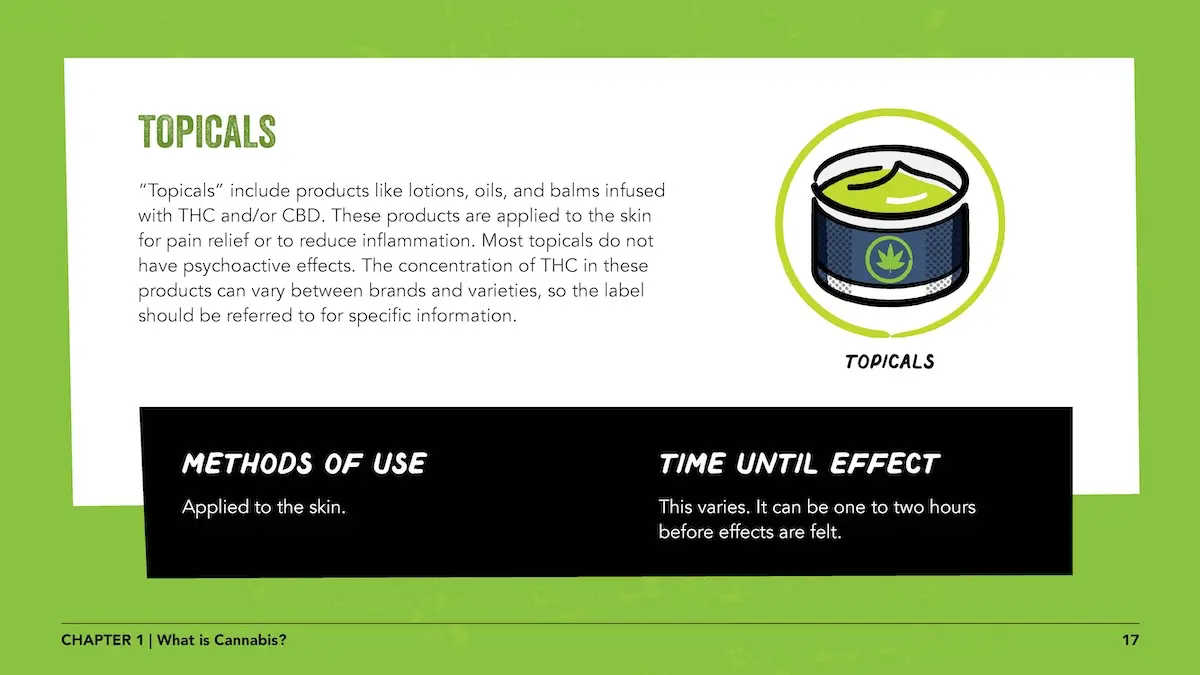
  • Information on Topicals: “Topicals” include products like lotions, oils, and balms infused with THC and/or CBD. These products are applied to the skin for pain relief or to reduce inflammation. Most topicals do not have psychoactive effects. The concentration of THC in these products can vary between brands and varieties, so the label should be referred to for specific information. Methods of use: applied to the skin. Time until effect. This varies. It can be one to two hours before effects are felt.
  • Good to know: THC can cause these types of effects. Different methods can lead to different effects. For example, smoking or vaping can cause THC to enter the body quickly, leading to fast-acting effects that might also wear off quickly.On the other hand, edibles take longer to affect the body but can lead to more intense and longer-lasting effects. Knowing these differences can help you have more informed and effective conversations with your child about cannabis use.
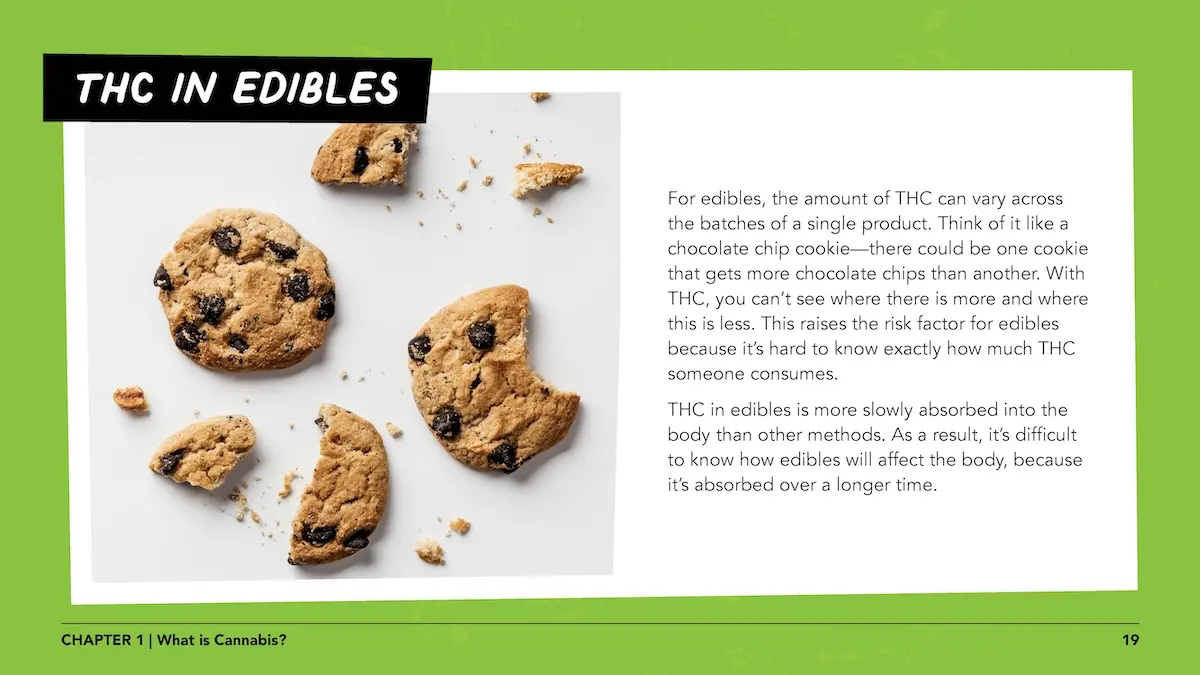
  • THC in Edibles: For edibles, the amount of THC can vary across the batches of a single product. Think of it like a chocolate chip cookie—there could be one cookie that gets more chocolate chips than another. With THC, you can’t see where there is more and where this is less. This raises the risk factor for edibles because it’s hard to know exactly how much THC someone consumes. THC in edibles is more slowly absorbed into the body than other methods. As a result, it’s difficult to know how edibles will affect the body, because it’s absorbed over a longer time.
  • THC in Edibles: THC in edibles is absorbed into the body more slowly than other consumption methods. As a result of the THC being absorbed over a longer time, it’s difficult to know how the body will be affected.
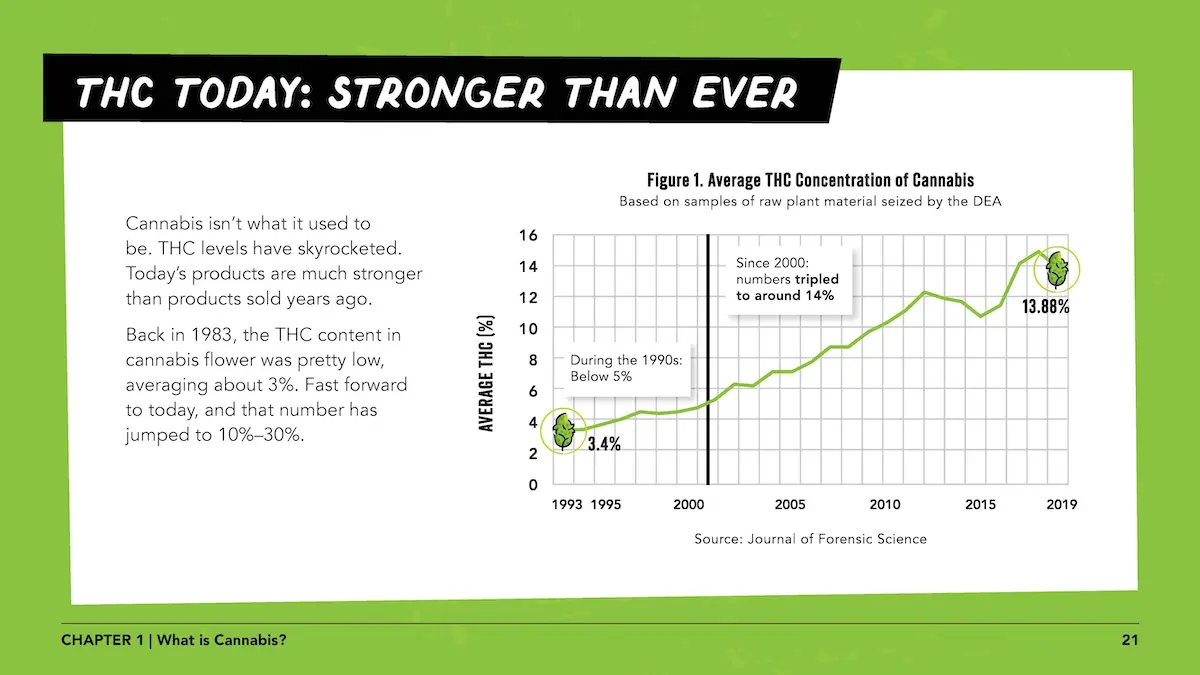
  • THC Today: Stronger Than Ever. Cannabis isn’t what it used to be. THC levels have skyrocketed. Today’s products are much stronger than products sold years ago. Back in 1983, the THC content in cannabis flower was pretty low, averaging about 3%. Fast forward to today, and that number has jumped to 10%–30%. Lesson slide shows chart that depicts the average THC concentration of Cannabis. During the 1990s the average THC concentration was below 5%. Since 2000 the numbers tripled to around 14%.
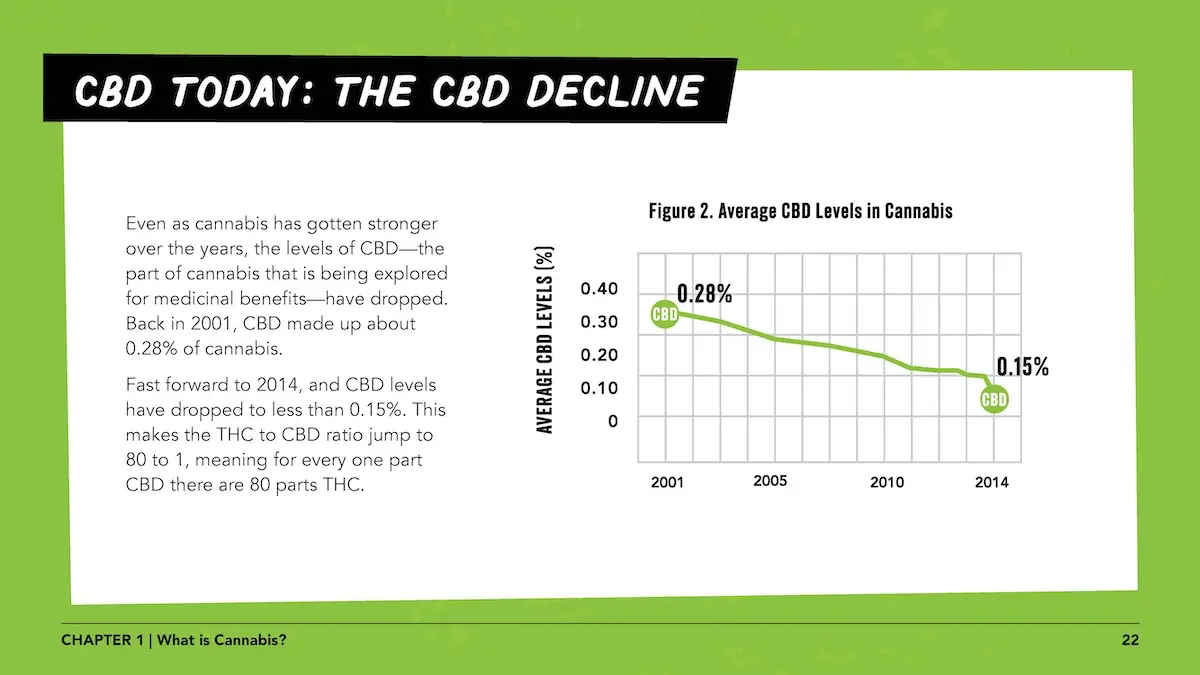
  • CBD Today: The CBD Decline. Even as cannabis has gotten stronger over the years, the levels of CBD—the part of cannabis that is being explored for medicinal benefits—have dropped. Back in 2001, CBD made up about 0.28% of cannabis. Fast forward to 2014, and CBD levels have dropped to less than 0.15%. This makes the THC to CBD ratio jump to 80 to 1, meaning for every one part CBD there are 80 parts THC. Lesson slide displays a chart that depicts the average CBD levels in cannabis. In 2001, the average CBD level was 0.28%, while in 2014 the average CBD level was 0.15%.
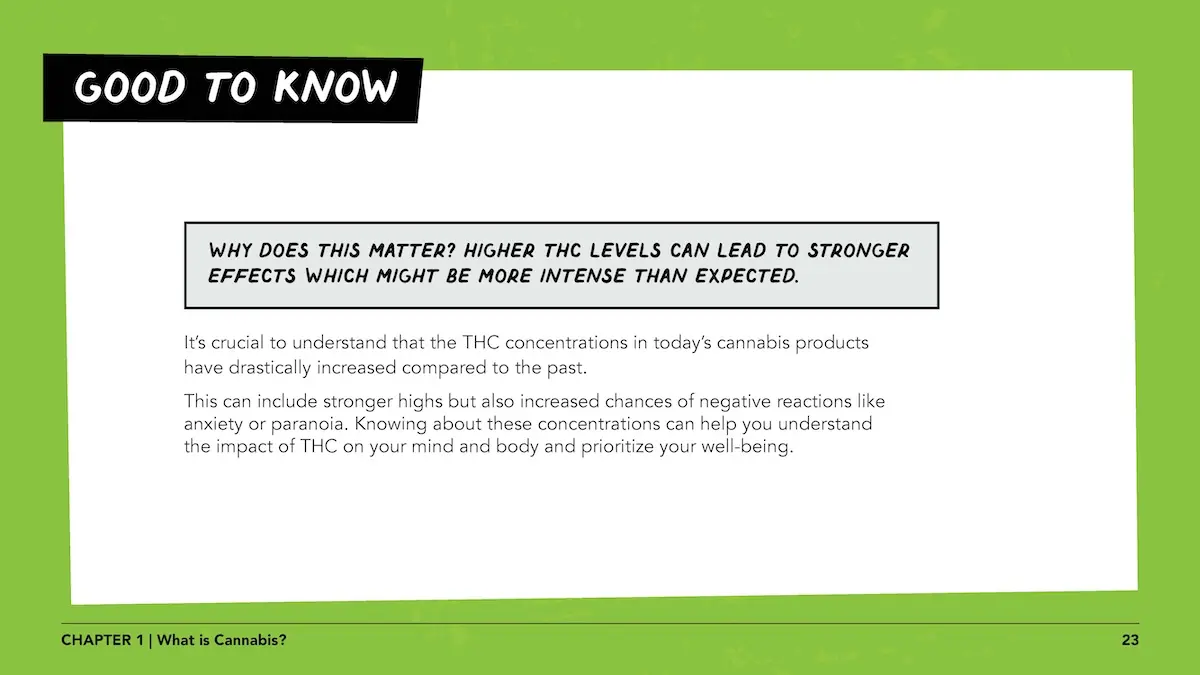
  • Good to know: Why does this matter? Higher THC levels can lead to stronger effects which might be more intense than expected. It’s crucial to understand that the THC concentrations in today’s cannabis products have drastically increased compared to the past. This can include stronger highs but also increased chances of negative reactions like anxiety or paranoia. Knowing about these concentrations can help you understand the impact of THC on your mind and body and prioritize your well-being.
  • Chapter 2 - What Can Happen?
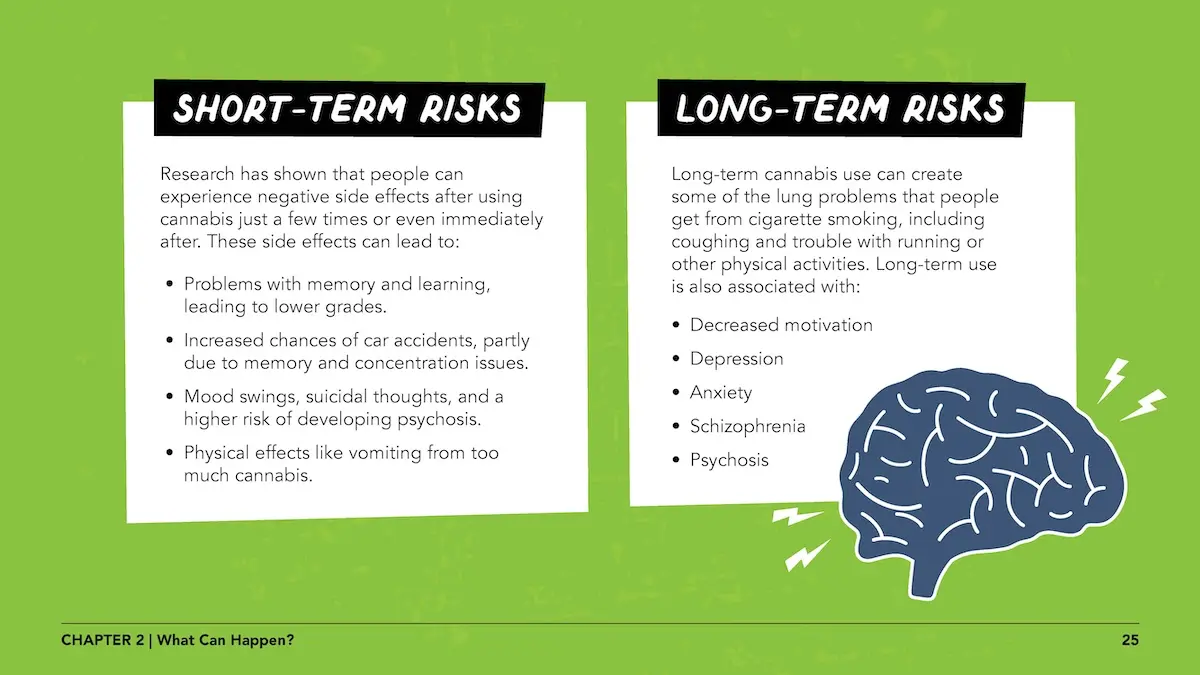
  • Short-Term Risks: Research has shown that people can experience negative side effects after using cannabis just a few times or even immediately after. These side effects can lead to: •Problems with memory and learning, leading to lower grades. •Increased chances of car accidents, partly due to memory and concentration issues. •Mood swings, suicidal thoughts, and a higher risk of developing psychosis. •Physical effects like vomiting from too much cannabis. Long-term risks: Long-term cannabis use can create some of the lung problems that people get from cigarette smoking, including coughing and trouble with running or other physical activities. Long-term use is also associated with: •Decreased motivation •Depression •Anxiety •Schizophrenia •Psychosis
  • We know cannabis use can be harmful for youth. When it comes to cannabis, concentration matters. We know that increased concentration is associated with increased risks to health.

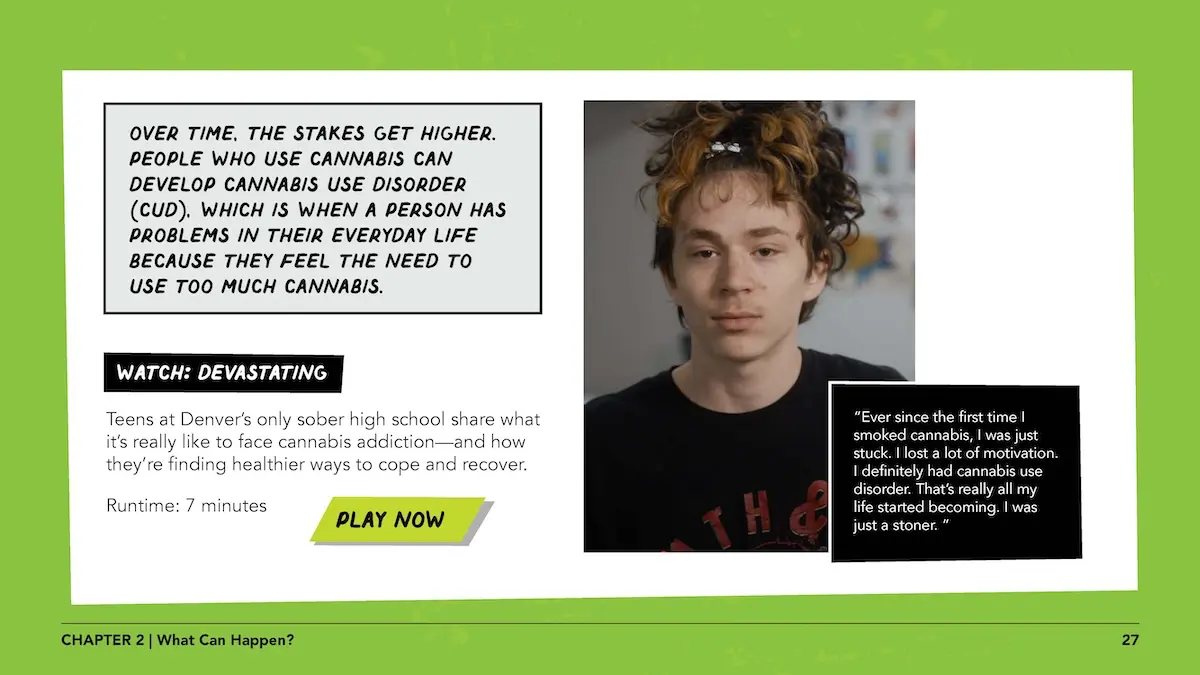
  • Over time, the stakes get higher. people Who use cannabis can develop cannabis use disorder (cud), Which is When a person has problems in their everyday life because they feel the need to use too much cannabis. Teens at Denver’s only sober high school share what it’s really like to face cannabis addiction—and how they’re finding healthier ways to cope and recover
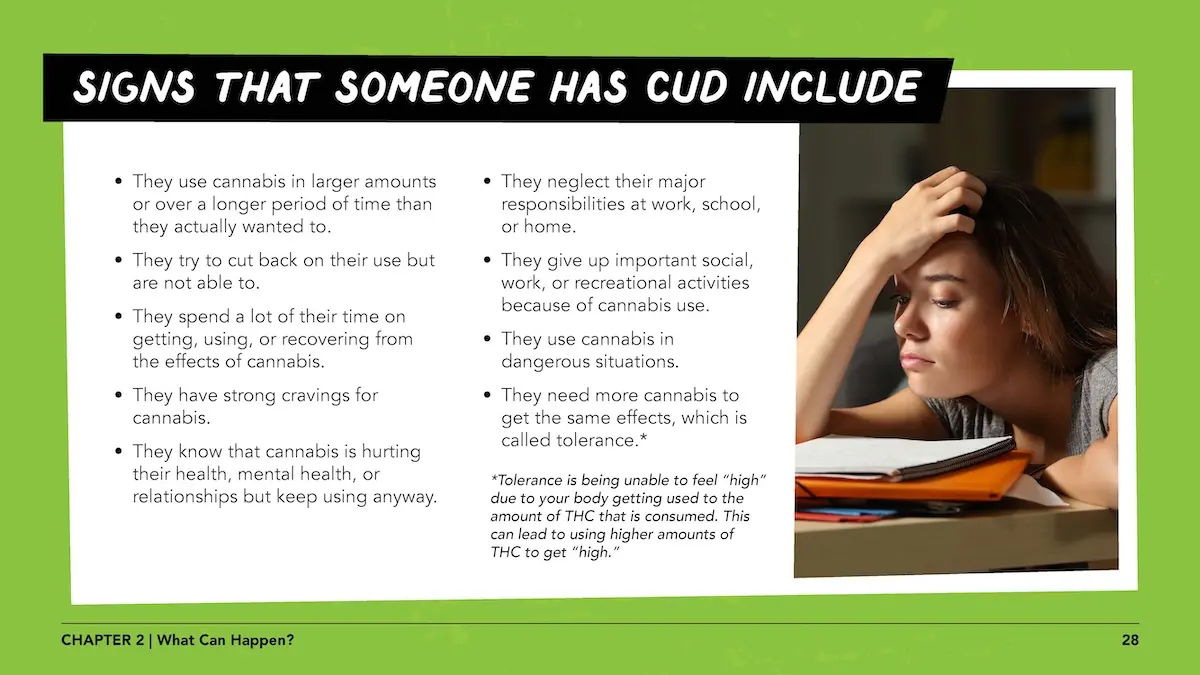
  • Signs that someone has CUD include: They use cannabis in larger amounts or over a longer period of time than they actually wanted to. •They try to cut back on their use but are not able to. •They spend a lot of their time on getting, using, or recovering from the effects of cannabis.•They have strong cravings for cannabis.•They know that cannabis is hurting their health, mental health, or relationships but keep using anyway. •They neglect their major responsibilities at work, school, or home.•They give up important social, work, or recreational activities because of cannabis use. •They use cannabis in dangerous situations.•They need more cannabis to get the same effects, which is called tolerance.**Tolerance is being unable to feel “high” due to your body getting used to the amount of THC that is consumed. This can lead to using higher amounts of THC to get “high.”
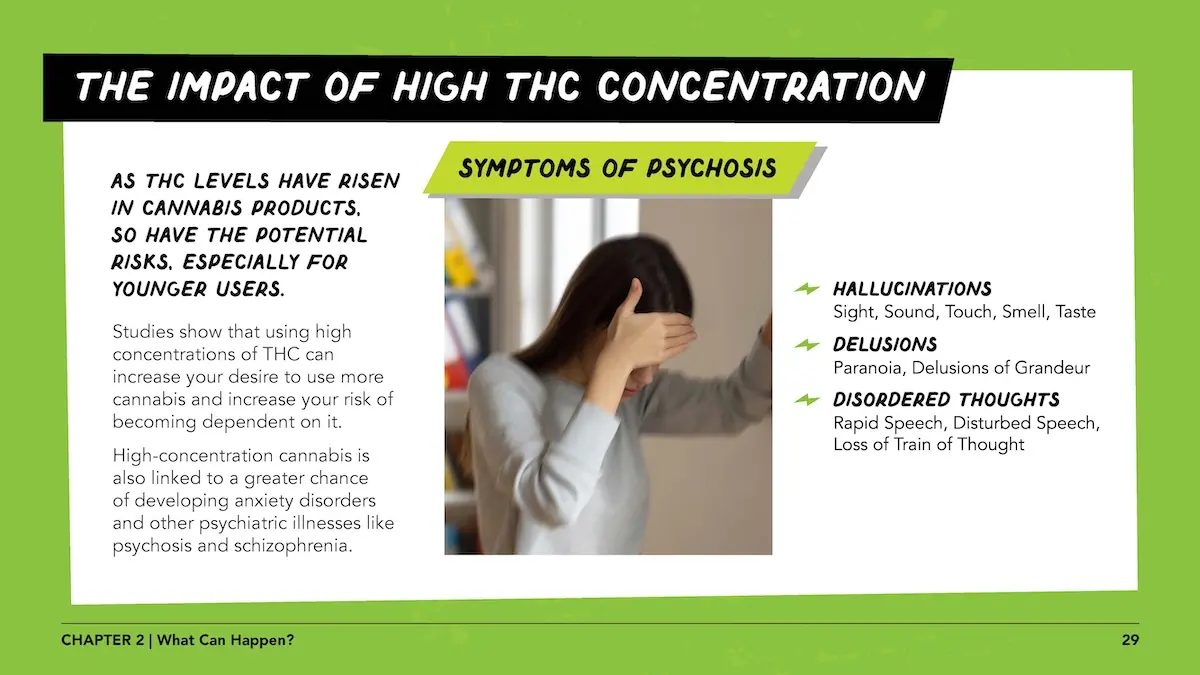
  • The impact of high THC concentration: As THC levels have risen in cannabis products, so have the potential risks. Especially for younger users. Studies show that using high concentrations of THC can increase your desire to use more cannabis and increase your risk of becoming dependent on it. High-concentration cannabis is also linked to a greater chance of developing anxiety disorders and other psychiatric illnesses like psychosis and schizophrenia. Symptoms of psychosis: hallucinations (sight, sound, touch , smell, and taste), delusions (paranoia and delusions of grandeur), and disordered thoughts (rapid speech, disturbed speech, loss of train of thought)
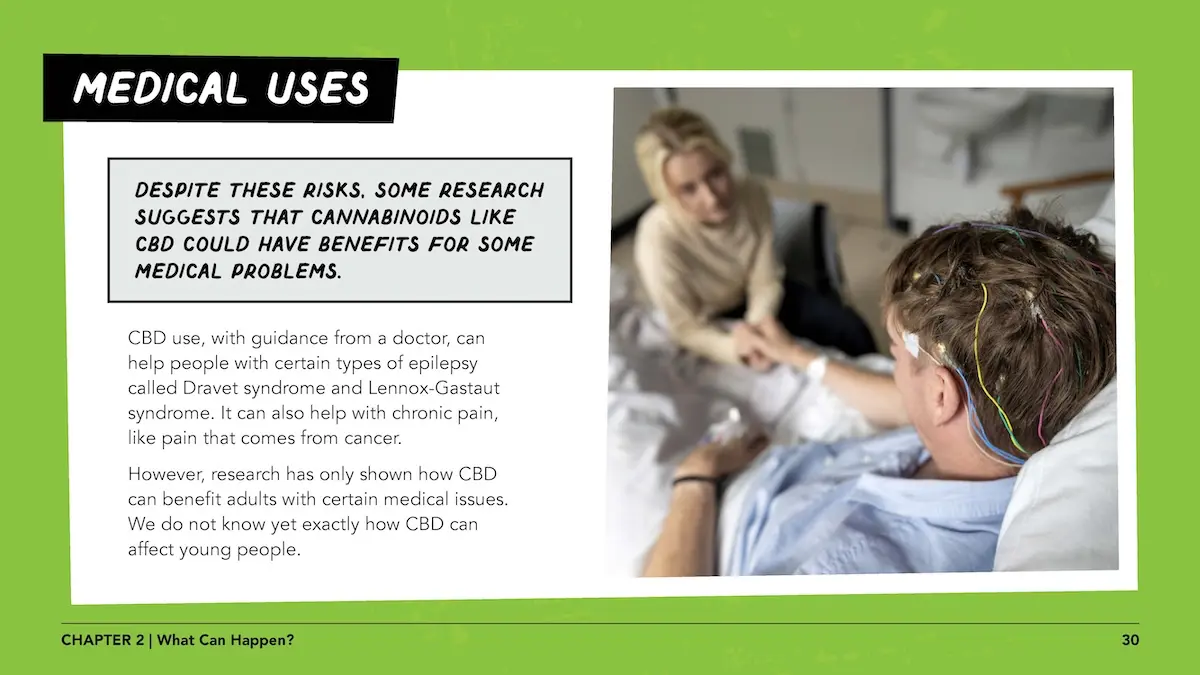
  • Medical uses: Despite these risks, some research suggests that cannabinoids like CBD could have benefits for some medical problems. CBD use, with guidance from a doctor, can help people with certain types of epilepsy called Dravet syndrome and Lennox-Gastaut syndrome. It can also help with chronic pain, like pain that comes from cancer. However, research has only shown how CBD can benefit adults with certain medical issues. We do not know yet exactly how CBD can affect young people.
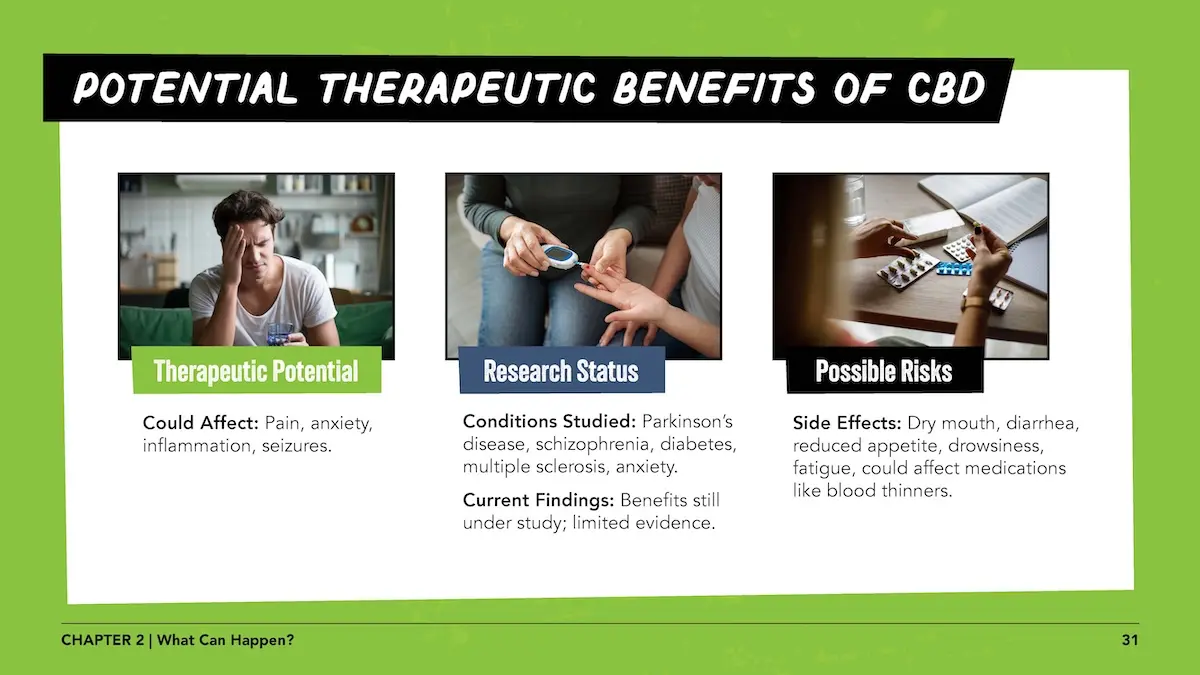
  • Potential therapeutic benefits of CBD. Therapeutic potential: could affect pain, anxiety, inflammation, seizures. Research status - conditions studied: parkinson's disease, schizophrenia, diabetes, multiple sclerosis, anxiety. Current findings: benefits still under study; limited evidence. Possible risks - side effects: dry mouth, diarrhea, reduced appetite, drowsiness, fatigue, could affect medications like blood thinners.
  • Congratulations!
    Youve taken an important step to educate yourself.
    Please take this quick & anonymous survey to reinforce your learnings & give us valuable feedback.
    Take Quiz
crossmenu linkedin facebook pinterest youtube rss twitter instagram facebook-blank rss-blank linkedin-blank pinterest youtube twitter instagram